UDL Alignment Analysis: Three Prompts to Inclusive Design 🌈
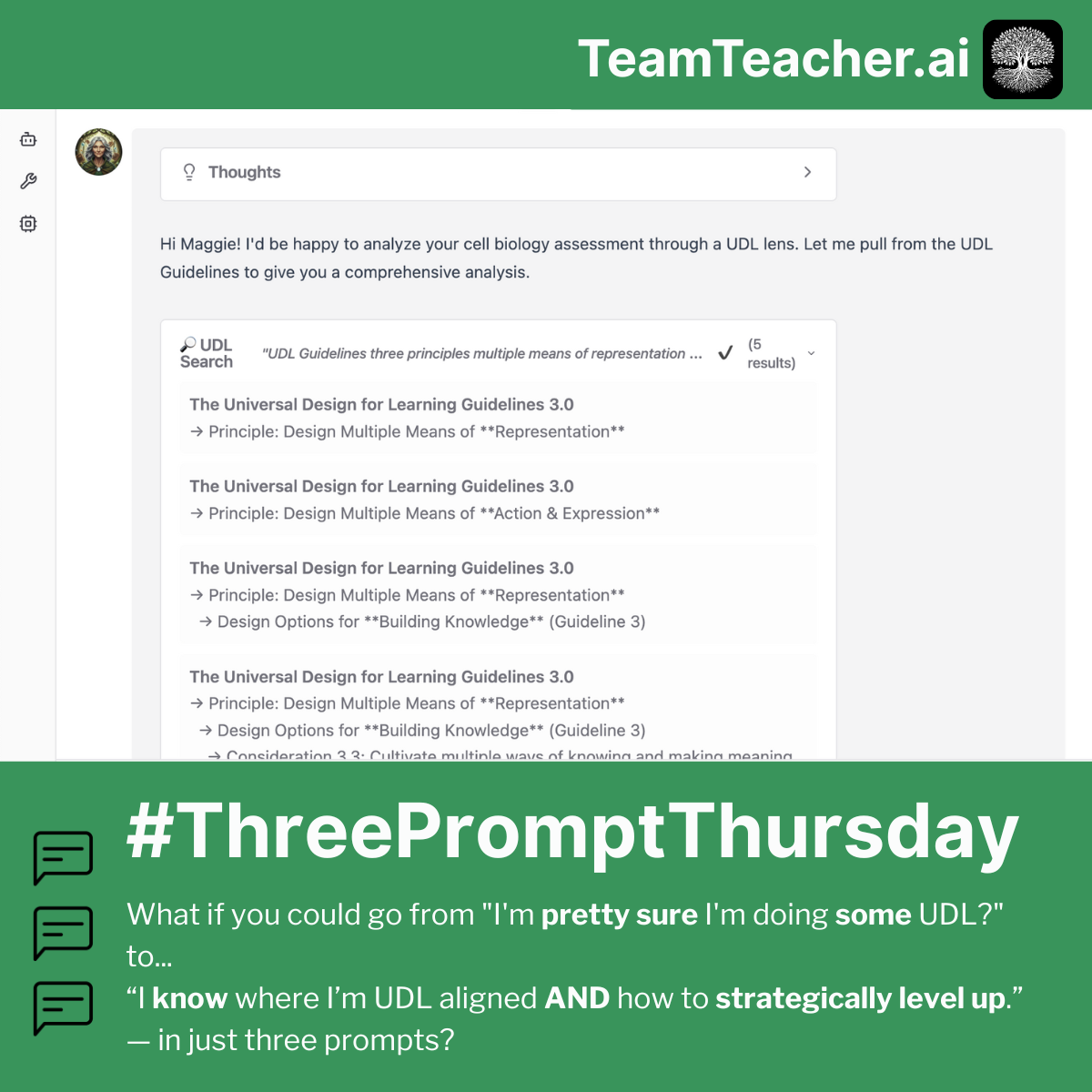
Teachers want to create inclusive learning environments. The challenge isn't commitment—it's finding time to analyze what you're already doing well and identify strategic next steps.
This workflow helps you assess your lessons against the Universal Design for Learning framework, recognize existing strengths, and integrate specific accessibility strategies. Go from "I think I'm doing some UDL?" to knowing exactly where you're aligned with the framework and how to strategically level up.
The Three Prompts
🎯 Prompt 1: Analyze Current Alignment
 Iris
Iris✏️ Prompt 2: Get Specific Strategies
Iris📋 Prompt 3: Integrate and Document
IrisHow to Adapt This 🔧
- Different planning stages: Works with draft lessons, existing units, or assessments you want to improve
- Different subjects and grade levels: The UDL framework applies universally across content areas
- Team planning: Run this analysis on collaborative unit plans to build shared understanding of inclusive design
What You'll Get ✨
This workflow gives you a complete UDL alignment analysis and actionable next steps:
- Analysis of where your current materials already align with UDL principles
- Identification of the biggest accessibility gaps in your design
- 2-3 concrete, classroom-ready strategies to address barriers
- A revised version of your materials with UDL strategies integrated and documented
You'll finish with both insight into your current practice and concrete materials ready to use.
🌳 Pro tip: TeamTeacher's UDL knowledge base is built with Guidelines 3.0 from CAST, so you're working with current, accurate principles rather than outdated or AI-hallucinated information.
Want to see where this started? Check out the original #ThreePromptThursday LinkedIn post